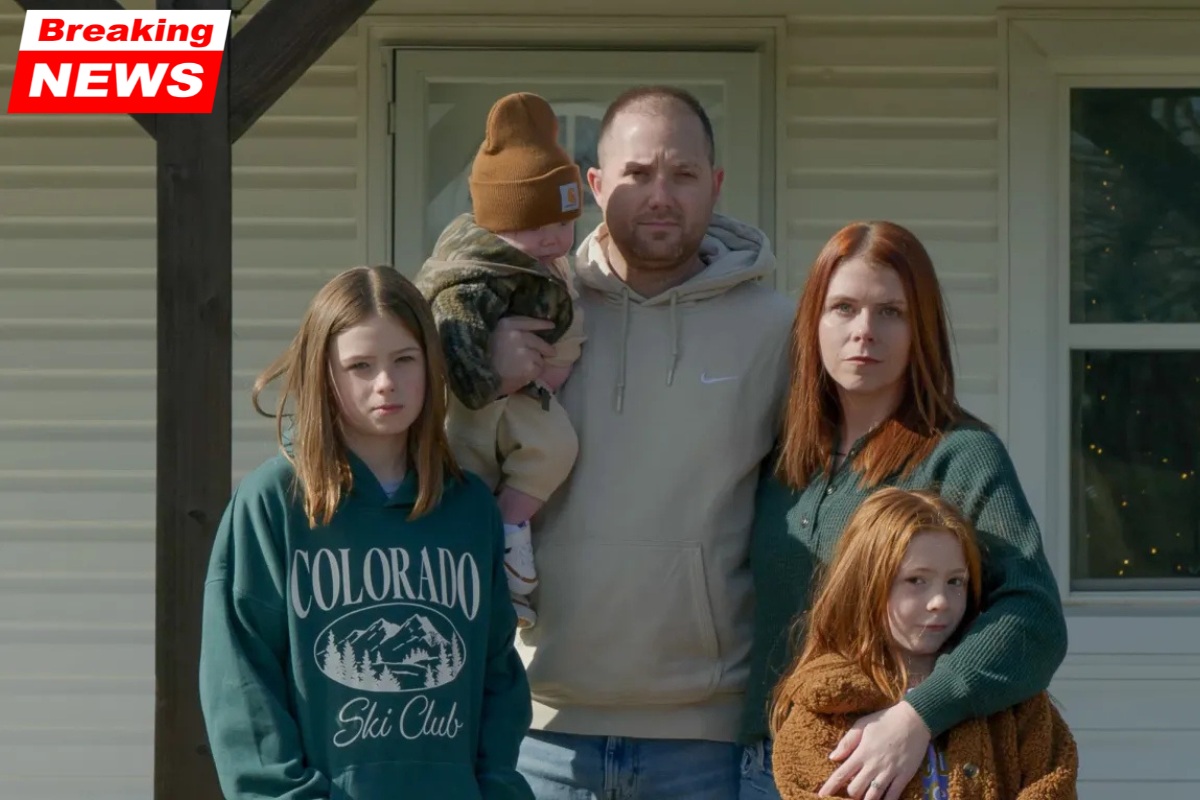
For Mitch and Kara Meredith, their newly built 2,500-square-foot modern farmhouse on Darlene Lane in Fort Gibson, Oklahoma, was the culmination of 12 years of saving.
The home, designed for their growing family, included a playroom, and family members had written their favorite Bible verses on the studs during construction.
For four years, the couple hosted birthday parties for their daughters and enjoyed life in the newly developed subdivision.
That all changed in August 2025, five weeks after the birth of their third child.
The Flooding Event
One evening, the family’s 7-year-old daughter ran into the garage to report flooding. Mitch initially assumed a pipe had burst or a toilet had backed up. But entering the bathroom revealed a thick black fluid with an oily sheen, flowing through the floor near their bedroom.
The family fought the flood all night:
- Vacuuming up sludge and dumping buckets out the window.
- Black goo covered their arms.
- Shiny rainbow patterns coated their shoes.
After pulling the bathtub away from the wall, Mitch discovered the substance gushing through the foundation. By 5 a.m., his uncle identified the material as oil. The family called the fire department, and Kara took the children to her grandmother’s house.
Mitch said, “And that’s the last time we got to be in our home.”
Investigation and Testing
The Merediths learned from state records that their house might have been built atop an improperly plugged oil well drilled in the 1940s.
- Mitch drilled a hole in the foundation to divert the sludge, confirming it was flowing from underground.
- The house was permeated with gas and foul-smelling fluids, ruining possessions and contaminating the home.
Oklahoma Corporation Commission (OCC) officials, including Jeremy Hodges, tested the site months later:
- Gas readings in the bathroom showed explosive levels.
- Salt readings suggested wastewater from oil and gas production.
- Independent tests confirmed the presence of heavy metals like barium and bromide, common in oil field wastewater.
Despite the findings, the OCC did not publicly confirm that oil and gas caused the contamination, referring to the substance simply as “water.”
Family Displacement and Living Conditions
Forced from their home, the Merediths moved four times in four months, paying mortgage and rent simultaneously at times. Nine months later, they reside in a 900-square-foot, two-bedroom bungalow on Mitch’s parents’ farm:
- The two daughters share a bunk bed.
- The baby sleeps in Mitch and Kara’s room.
- Toys, clothes, and half-packed boxes remain in their old home.
- Their possessions are still contaminated, and wet clothes sat in the washer for months.
The house on Darlene Lane is now a frozen snapshot of their old life, while the contamination continues to spread into a neighbor’s yard.
Regulatory Challenges
The family initially sought help from the OCC, hoping the agency would identify the source and remediate the contamination.
- Hodges and other officials indicated that tearing down the house might be required to plug the well.
- Town hall meetings revealed widespread frustration, with residents pressing the agency about the environmental and public health risks.
At a March town hall, citizens challenged the OCC on whether they would personally live in the contaminated house. Hodges declined to answer directly, prompting jeers.
Insurance complications:
- The Merediths’ insurer denied coverage, citing exclusions for pollution and water damage.
- They sued American Mercury Insurance and the developers; both have not publicly responded.
Legislative Developments
Oklahoma lawmakers, led by Senator Avery Frix, passed legislation creating a fund to compensate homeowners for oil and gas pollution.
- The fund requires OCC confirmation of a well before compensation is released.
- The Merediths hope the bill will eventually provide relief, but their home remains contaminated.
Table: Meredith Family Oil Contamination Case Overview
| Category | Details |
|---|---|
| Family | Mitch and Kara Meredith, three children |
| Location | Darlene Lane, Fort Gibson, Oklahoma |
| Home Size | 2,500 sq ft, modern farmhouse |
| Event | August 2025 flooding from black, oily sludge |
| Suspected Source | Improperly plugged 1940s oil well |
| Environmental Findings | Explosive gas levels; heavy metals (barium, bromide); wastewater salt readings |
| Regulatory Agency | Oklahoma Corporation Commission (OCC) |
| Insurance | American Mercury denied claim; litigation ongoing |
| Displacement | Family moved four times in four months; currently in 900 sq ft bungalow |
| Legislative Relief | State fund created to compensate homeowners after confirmation of well |
Ongoing Risks and Community Impact
The incident underscores a statewide problem:
- Oklahoma lists 19,000 orphaned wells, but federal research estimates over 300,000 unremediated wells.
- Half of Oklahomans live within one mile of oil and gas wells, raising concerns about similar contamination risks.
The Meredith family’s situation has drawn media attention, including coverage by The Frontier and ProPublica, highlighting environmental and public health concerns tied to abandoned wells.
The Meredith family’s nightmare illustrates the dangers posed by orphaned oil wells and inadequate regulatory oversight. Despite evidence of contamination, elevated gas readings, and heavy metal presence, remediation efforts remain slow, leaving families displaced and vulnerable.
Legislative measures may provide financial relief, but for the Merediths, returning home safely remains uncertain as contamination continues to affect their neighborhood.