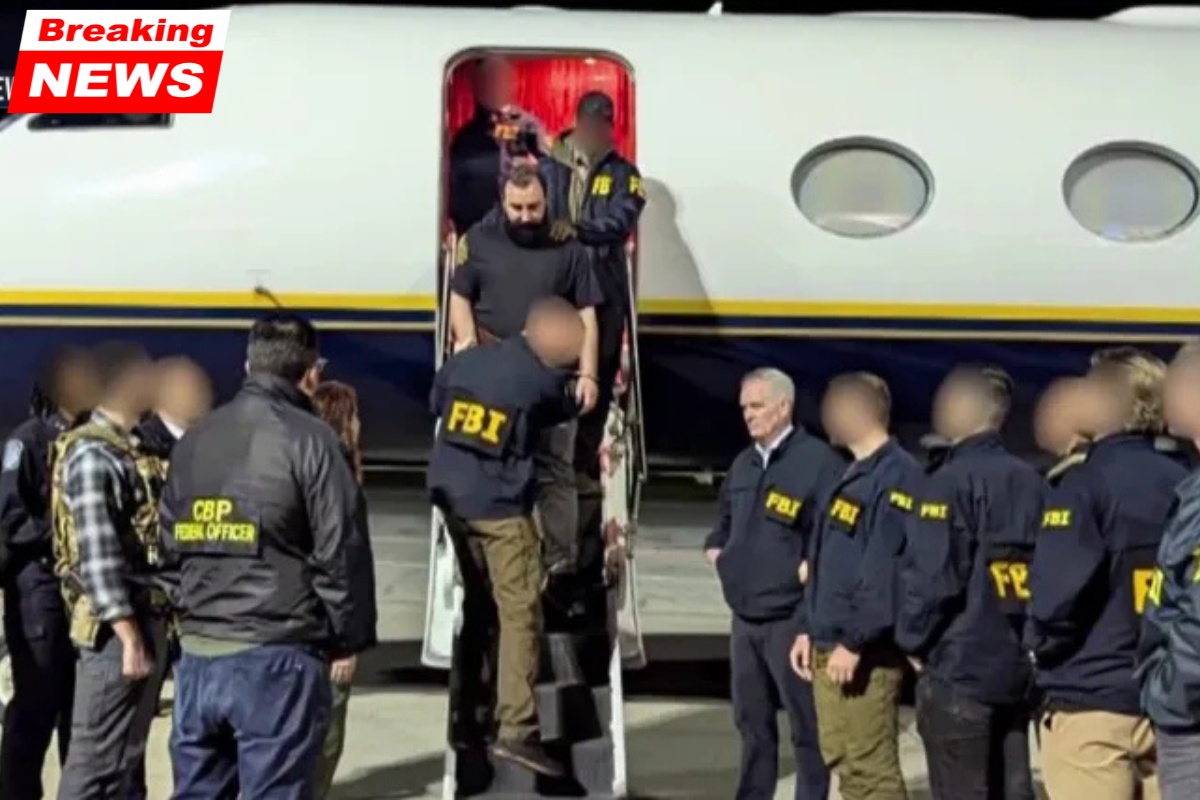
A suspected terrorist commander linked to an Iran-backed militant group has been charged in connection with an alleged plot to carry out attacks on Jewish sites in New York City, Los Angeles and Scottsdale, Arizona.
Federal prosecutors accused Mohammad Al-Saadi of attempting to organize multiple terrorist attacks by hiring someone he believed was connected to a Mexican cartel. However, the individual was actually an undercover law enforcement agent working with U.S. authorities.
The case has raised fresh concerns about global terrorism threats tied to Iran-backed organizations and the growing risk to Jewish communities in the United States and Europe.
| Key Detail | Information |
|---|---|
| Suspect | Mohammad Al-Saadi |
| Alleged Terror Group | Kata’ib Hizballah |
| Countries Targeted | United States and Europe |
| Planned U.S. Targets | New York City, Los Angeles, Scottsdale |
| Main Allegation | Plot to attack Jewish sites |
| Arrest Charges | Terrorism and conspiracy offenses |
| Investigating Agencies | Federal law enforcement and NYPD |
Who Is Mohammad Al-Saadi?
Mohammad Al-Saadi is accused of being a commander within Kata’ib Hizballah, a militant organization based in Iraq that the United States has officially designated as a foreign terrorist organization.
According to federal prosecutors, the group has strong ties to Iran’s Islamic Revolutionary Guard Corps (IRGC), which Washington also classifies as a terrorist organization.
Authorities claim Al-Saadi has supported terrorist operations since at least 2017 and maintained connections with senior militant figures, including Qasem Soleimani, who was killed in a U.S. airstrike in 2020.
Prosecutors allege Al-Saadi played a direct role in coordinating and encouraging attacks against Americans, Israelis and Jewish communities globally.
Details of the Alleged U.S. Terror Plot
According to court documents, Al-Saadi attempted to recruit someone he believed was a cartel member to carry out arson attacks against Jewish locations in the United States.
The alleged targets included a synagogue in Manhattan and Jewish centers located in Los Angeles and Scottsdale, Arizona.
Federal investigators say Al-Saadi offered $10,000 for the attacks and requested that the incidents be recorded on video.
Authorities stated that the undercover operation helped disrupt the alleged plan before any attack could be carried out.
New York City Police Department Commissioner Jessica Tisch confirmed that law enforcement agencies worked together to protect the targeted synagogue after the threat level increased.
Tisch said the case highlights ongoing threats posed by Iranian-backed militant organizations targeting Jewish communities worldwide.
Charges Filed Against Al-Saadi
Federal prosecutors charged Al-Saadi with multiple terrorism-related offenses.
The charges include:
| Charge | Description |
|---|---|
| Material Support to Terrorist Organization | Conspiring to assist a designated terrorist group |
| Material Support for Terrorism | Supporting planned terrorist acts |
| Conspiracy to Bomb Public Places | Planning attacks on civilian locations |
| Destruction of Property | Using fire or explosives in planned attacks |
If convicted, Al-Saadi could face severe federal prison penalties.
Authorities said he was expected to appear in federal court in Manhattan for his initial hearing.
Connection to Global Terror Activity
Investigators also accuse Al-Saadi of helping coordinate at least 18 attacks across Europe and two additional incidents in Canada.
According to the criminal complaint, the attacks targeted Jewish institutions and Western interests in several countries, including Belgium, the Netherlands, France and the United Kingdom.
Reported incidents included attacks on:
- A synagogue in Liège, Belgium
- A Jewish school in Amsterdam
- A Bank of America building in Paris
- Arson attacks in London
Prosecutors say the attacks were carried out under the name “Harakat Ashab al-Yamin al-Islamiya” (HAYI), which authorities describe as part of Kata’ib Hizballah.
Online Threats and Extremist Messages
Federal authorities allege that Al-Saadi used platforms including Telegram, X and Snapchat to encourage violence against Americans and Israelis.
Court filings include extremist messages allegedly posted by Al-Saadi after the outbreak of war involving Iran earlier this year.
In one message cited in the complaint, he allegedly called for attacks against both civilian and military targets linked to the United States and Israel.
Investigators also referenced an April 1 phone conversation in which Al-Saadi reportedly stated that the conflict would continue until one side was completely eliminated.
Officials argue the messages demonstrate clear intent to inspire and coordinate acts of terrorism internationally.
Experts Warn of Ongoing Threats
Security experts say the disrupted plot reflects a broader strategy by Iranian-backed militant organizations to expand operations beyond the Middle East.
Sajjan Gohel, international security director at the Asia-Pacific Foundation, warned that the infrastructure built by the IRGC and its affiliated groups remains active despite this arrest.
Gohel explained that HAYI serves as a propaganda and operational front connected to Iranian-backed militant activities.
He added that while the U.S. plot was stopped, concerns remain high regarding future threats targeting Jewish communities across Europe and North America.
Rising Concerns Over Global Security
The case comes during heightened tensions involving Iran, Israel and militant groups operating across the Middle East.
Law enforcement agencies in the United States and Europe have increasingly warned about possible retaliatory attacks tied to geopolitical conflicts in the region.
Officials say Jewish institutions, synagogues and public gathering places remain potential targets for extremist violence.
The investigation also highlights the growing role of online communication platforms in spreading extremist propaganda and coordinating international terror operations.
The charges against Mohammad Al-Saadi represent one of the most serious alleged terror plots targeting Jewish communities in the United States in recent months.
Authorities say the planned attacks were successfully disrupted through undercover operations and coordination between federal agencies and local law enforcement.
The case also underscores ongoing concerns about Iran-backed militant organizations, international extremist networks and the continued threat of terrorism against civilian targets around the world.
As investigations continue, security officials remain focused on preventing future attacks and monitoring global terror groups operating both online and across international borders.